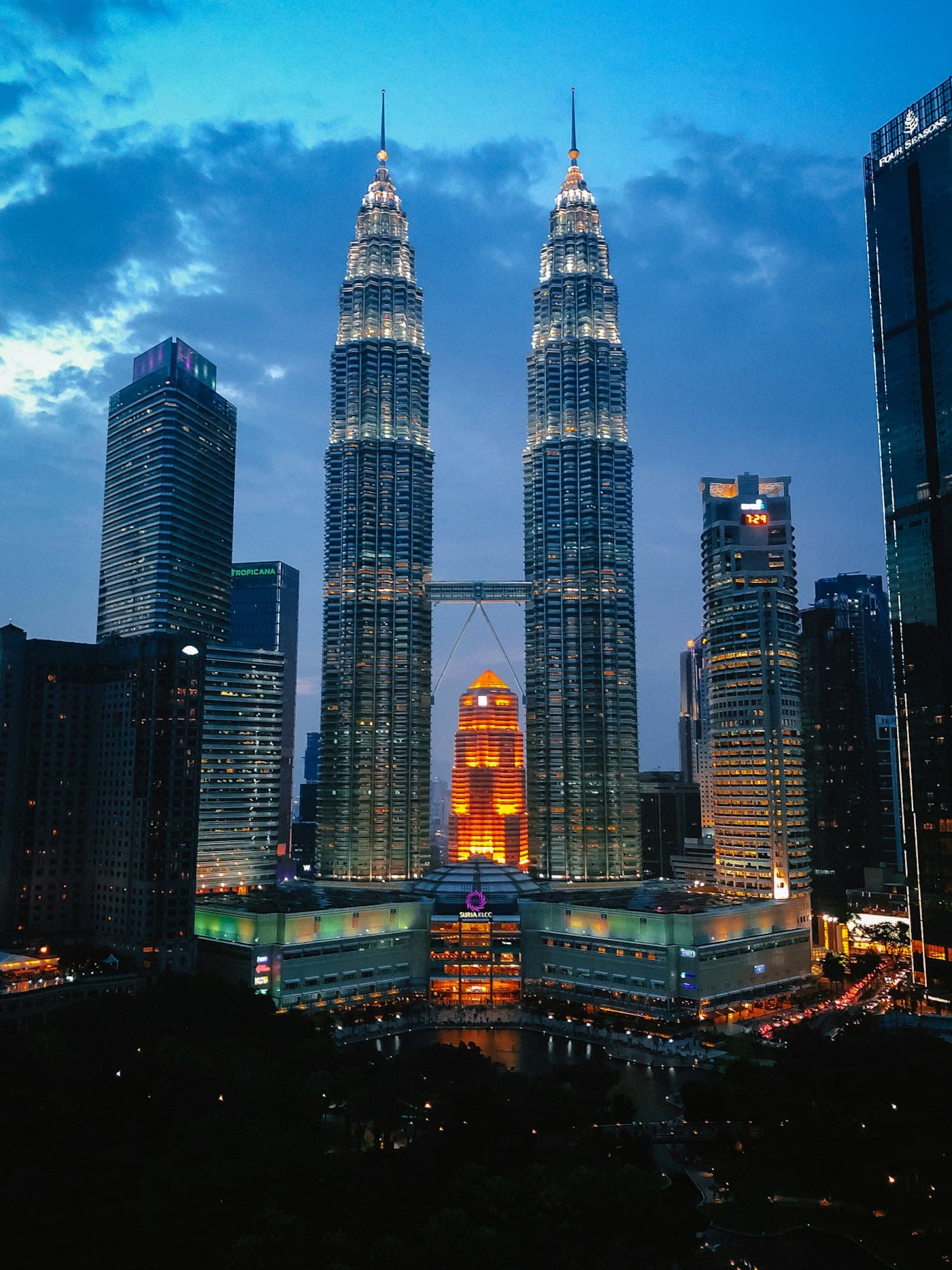
Two Days in Kuala Lumpur: Towers, Temples and Food
25 January 2026 · 5 min read
A two-day Kuala Lumpur plan covering skyline views, temples, heritage streets and the city's best food.
Kuala Lumpur blends Malay, Chinese and Indian cultures in a compact, easy-going capital. Two days is enough to see the major landmarks, wander through heritage districts and eat a remarkable variety of food. The city is warm and humid all year, so this plan places outdoor sightseeing in the cooler parts of the day and indoor stops around midday. Roads can be congested, so the route is built around rail lines and short distances. Expect to combine modern towers with old temples and busy markets, and to leave with a clear sense of why this city is such a popular first stop in Southeast Asia.
Where to base yourself
For a short stay, choose a hotel near a rail station so you can avoid traffic. The area around the twin towers, known as KLCC, offers polished hotels, shopping and parkland, though prices are higher. Bukit Bintang is the lively central district with malls, street food and entertainment, and it suits most first-time visitors. Chinatown and the heritage area around Merdeka Square offer cheaper rooms and local character, with noisy nights in some streets. Look for good air conditioning, clean rooms and an easy walk to a train or monorail station. Read recent reviews about noise, because busy districts can be loud late into the evening.
Day one morning: the towers and the park
Start early at the twin towers, which dominate the skyline and are best photographed from the park at their base, where fountains and shaded paths make a pleasant stroll. If you want to go up to a viewing deck, book a time slot in advance and choose a clear morning, because haze or rain reduces visibility. Alternatively, a nearby tower with a tall observation level offers a different perspective. Afterwards, cool down in the adjoining shopping centre, which has air conditioning, restaurants and an aquarium for those with children. Keep your pace gentle, and drink water often, since humidity can drain energy quickly.
Day one afternoon: heritage and temples
After lunch, ride the train to the historic centre around Merdeka Square, where colonial-era buildings with Moorish-style arches stand near a large open lawn. Walk along the river area and then continue to Chinatown, with its market stalls, shophouses and traditional medicine shops. Visit an old Chinese temple and a Hindu temple nearby, dressing modestly and removing shoes where asked. Keep a little cash for small donations and street snacks. By late afternoon, find a cafe or a tea house for a break. The contrast between glass towers and incense-filled temples is what gives the city its character.
Day two: caves, gardens and local life
On your second day, take a short train or ride-hailing trip to the famous limestone cave temple north of the city, reached by a steep staircase of colourful steps. Go early to avoid the heat and the crowds, and be careful with the monkeys, who may snatch food or loose items. Return to the city for lunch, then visit a large lake garden or a bird park if you enjoy green spaces. In the late afternoon, browse a craft centre or a handicraft market for souvenirs such as batik and pewter. Save energy for the evening, which is when the city's food scene comes alive.
Eating your way through the city
Food is the main attraction. Try nasi lemak, a coconut rice dish with sambal and side items, often eaten at breakfast. Look for noodle dishes in Chinese-style kopitiam cafes, and banana-leaf rice in Indian restaurants, where you eat with your right hand or cutlery as you prefer. Street food areas fill with grilled satay, fried noodles and fresh juices after sunset. Hawker stalls are usually inexpensive, but check prices if none are shown. Choose busy stalls with quick turnover, and carry hand sanitiser. Many restaurants are halal, and Chinese and Indian eateries offer plenty of alternatives, so dietary needs are often easy to meet.
Getting around
The city has light rail, metro and monorail lines that connect many key areas, and a rechargeable card makes travel simple. Not all lines connect directly, so use a navigation app to plan transfers. Ride-hailing cars are widely used and generally convenient, especially in the evening or when the heat is strong, though traffic jams can make journeys slow at peak times. Sidewalks can be uneven or interrupted by construction, so watch your footing. Covered walkways link several major stations and malls, which helps during sudden tropical downpours. Keep an umbrella in your bag, since afternoon showers are common in many months.
Mistakes to avoid
Do not schedule outdoor sightseeing at midday, when heat and humidity are strongest. Avoid relying on taxis during rush hour when trains are faster. Do not forget modest clothing for temples and mosques, and carry a light scarf or shawl if needed. Be careful with phones and bags in crowded markets and on stairs. Do not leave the cave temple for late in the day, as the climb is harder in the heat. And avoid booking a room far from any station just to save a little, because the cost of long rides and wasted time will outweigh the difference.
Choosing your hotel area
For first-timers, Bukit Bintang is the easiest choice, with food, shopping and transport within walking distance. KLCC is better if you want a quieter, upscale atmosphere and the park views. Chinatown and the Merdeka area suit travellers who prefer character and lower prices, accepting a little more street noise. If you plan to leave early for the caves or the airport, check the nearest station and the last train times. A comparison page lets you filter by neighbourhood and review score, and flexible cancellation gives you a safety net while you finalise your plans.
Ready to book your stay in Kuala Lumpur?
Compare hotels, areas and indicative prices.
Written by the Hoko Travel editorial team. Details such as prices and opening hours can change, so please check official sources before you travel.
Keep reading
Itineraries · 4 min read
Three Days in Bangkok: An Easy First-Timer Itinerary
Temples, river life and one unforgettable night market, in a plan that does not exhaust you.
12 September 2026
Itineraries · 4 min read
A Slow Week in Bali: Beach, Jungle and Cliffs
Split your time across three bases and you will see three completely different sides of the island.
25 August 2026
Itineraries · 4 min read
10 Days in Vietnam: Hanoi to Ho Chi Minh City
A classic north-to-south route with hotel tips for each stop, from the Old Quarter to the Mekong.
18 June 2026