Where to stay in Bali
Bali is several holidays in one. Surf and sunsets in Canggu and Uluwatu, yoga and rice paddies in Ubud, and polished beach resorts in Nusa Dua and Seminyak. Here is how the main areas compare, so you can choose a base that fits your trip before you pick a hotel.
| Area | Best for | Price | Walkability | Vibe |
|---|---|---|---|---|
| Seminyak | Beach clubs and dining | $$$· | ●●●○○ | Stylish, social and full of restaurants and boutiques. |
| Ubud | Culture, wellness and nature | $$·· | ●●●○○ | Green, spiritual and unhurried. |
| Uluwatu | Surfers and clifftop views | $$$· | ●○○○○ | Rugged, relaxed and focused on the ocean. |
| Nusa Dua | Families and full-service resorts | $$$$ | ●●○○○ | Orderly, quiet and resort-focused. |
| Canggu | Surf, cafes and digital nomads | $$·· | ●●○○○ | Laid-back and trendy, with a relaxed surf-town mood. |
Seminyak
Beach clubs and diningSeminyak is the classic choice for travellers who want style, food and a lively evening scene. Boutique shops and cafes fill the lanes, while the beach clubs host sunset sessions that last well into the night. Villas with private pools are plentiful, making it popular for couples and small groups. Traffic can be slow, particularly at peak hours, so choose a spot within walking distance of the places you plan to eat. Mornings are quiet and ideal for the beach, but swimming conditions can be rough, so pay attention to flag warnings. Expect higher prices than in many other parts of the island.
Getting around: No rail in Bali, so rely on ride-hailing, taxis or a hired driver.
Pros
- + Excellent restaurants and sunset bars
- + Wide beach with surf lessons
- + Plenty of villa and hotel choice
Cons
- - Heavy traffic on main roads
- - Can feel crowded and commercial
- - Beach has strong currents
Ubud
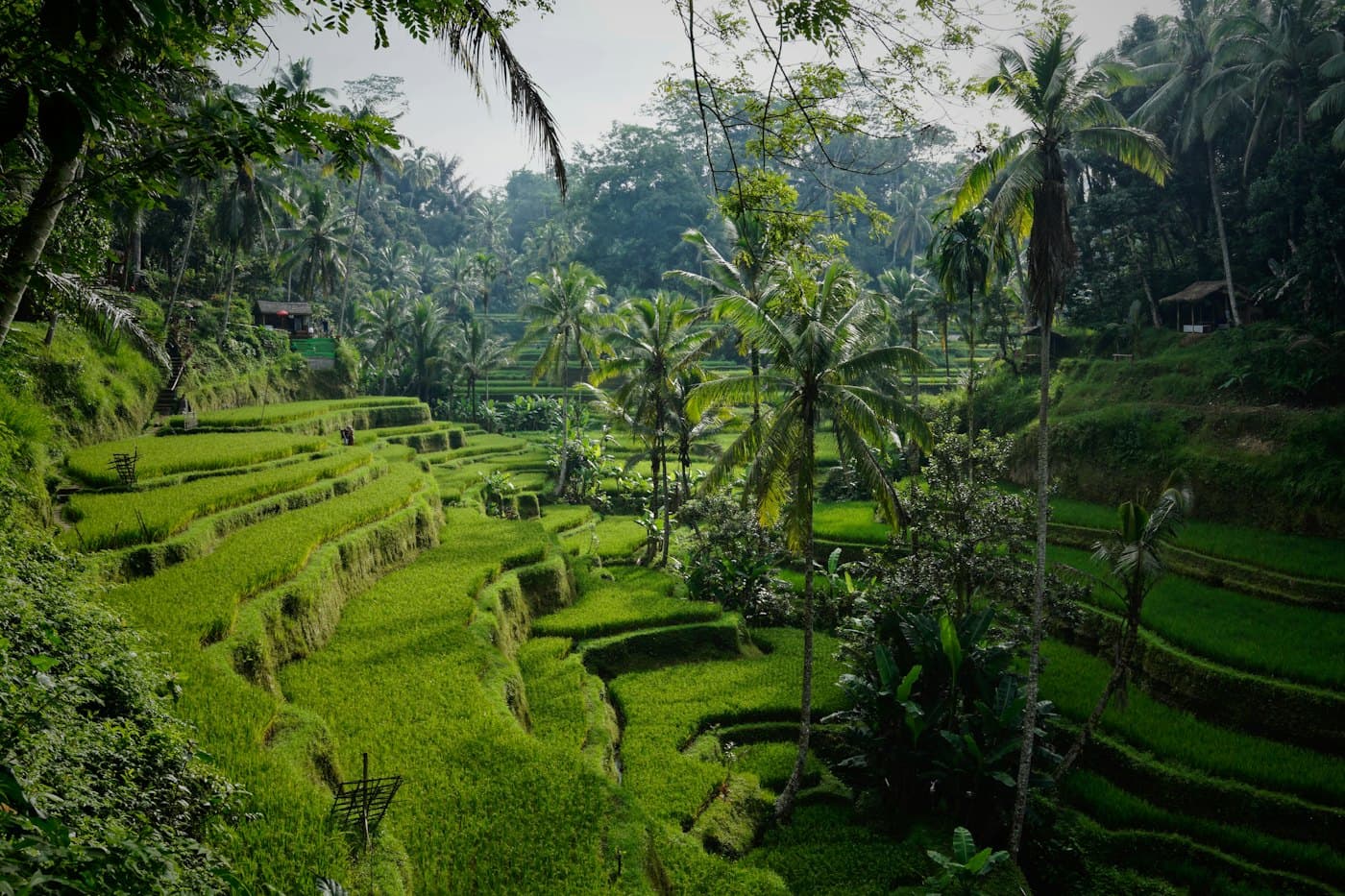
Culture, wellness and natureUbud appeals to those who prefer greenery to sand. Days revolve around temples, art museums, markets, cooking classes and walks through terraced fields. Yoga studios and wellness retreats are everywhere, and healthy cafes are easy to find. The centre is lively and busy during the day, but evenings are calm, with early nights common. Accommodation ranges from simple homestays to luxury hideaways with jungle views, often at good value. The roads can be crowded, so choose a base close to what you want to do, and allow generous time for airport transfers. It rewards slow travel more than a packed schedule.
Getting around: No rail; use ride-hailing, scooters or a driver, and expect slow roads in the centre.
Pros
- + Rice fields and jungle scenery
- + Yoga, spas and art galleries
- + Good-value villas and guesthouses
Cons
- - Not on the beach
- - Congested central streets
- - Long transfers from the south
Uluwatu
Surfers and clifftop viewsUluwatu is for surfers, honeymooners and anyone who loves big ocean views. The coastline is made up of cliffs, hidden beaches and clifftop bars where sunset is the main event. Villas and boutique hotels often come with generous space and privacy. Days are for surfing, beach hopping and lounging by the pool, and evenings are relaxed, with a handful of well-known venues. The area is large and spread out, so plan transport in advance and expect to pay for rides. Some beaches are reached by steep stairs and tides matter for swimming. It is peaceful and scenic but not ideal for a car-free stay.
Getting around: No rail; a scooter, ride-hailing or driver is essential, as places are spread out.
Pros
- + World-class surf breaks
- + Dramatic cliff and sunset views
- + Stylish clifftop villas and beach clubs
Cons
- - Very spread out
- - Few walkable amenities
- - Steep access to some beaches
Nusa Dua
Families and full-service resortsNusa Dua is a gated-style resort enclave built for relaxation. Beaches here are generally calmer than on the west coast, which suits families and older travellers, and the big hotels offer pools, kids' clubs, spas and several restaurants. Days follow a simple rhythm of beach, pool and spa, with the odd trip out for water sports. Evenings are quiet, with dining mostly in resorts or a small number of outside venues. If you want a local street scene or nightlife, you will need to travel to other areas. It is a stress-free, comfortable choice for those who value service and predictability.
Getting around: No rail; resorts offer shuttles, and taxis or ride-hailing cover the rest.
Pros
- + Calm, swimmable beaches
- + Large resorts with kids' facilities
- + Tidy, safe and well kept
Cons
- - Feels isolated from local life
- - Limited nightlife
- - Resort pricing for meals
Canggu
Surf, cafes and digital nomadsCanggu draws surfers, remote workers and younger travellers who want a social, casual base. Mornings are for surf sessions and long breakfasts, afternoons for working from a cafe or lounging by a pool, and evenings for beach bars and live music. Guesthouses, hostels and villas provide good value compared with Seminyak. The main drawback is traffic, which can turn short trips into long ones, so book accommodation close to where you plan to spend time. Building work is ongoing, and some lanes lack pavements. It suits energetic, independent travellers rather than those after quiet luxury.
Getting around: No rail; scooters and ride-hailing are common, and narrow lanes clog up easily.
Pros
- + Surf breaks for all levels
- + Great cafes and coworking spots
- + Good-value villas and guesthouses
Cons
- - Traffic is often gridlocked
- - Construction noise in places
- - Dark beach sand and busy shorelines
Found your area?
See hotels and indicative prices in Bali.