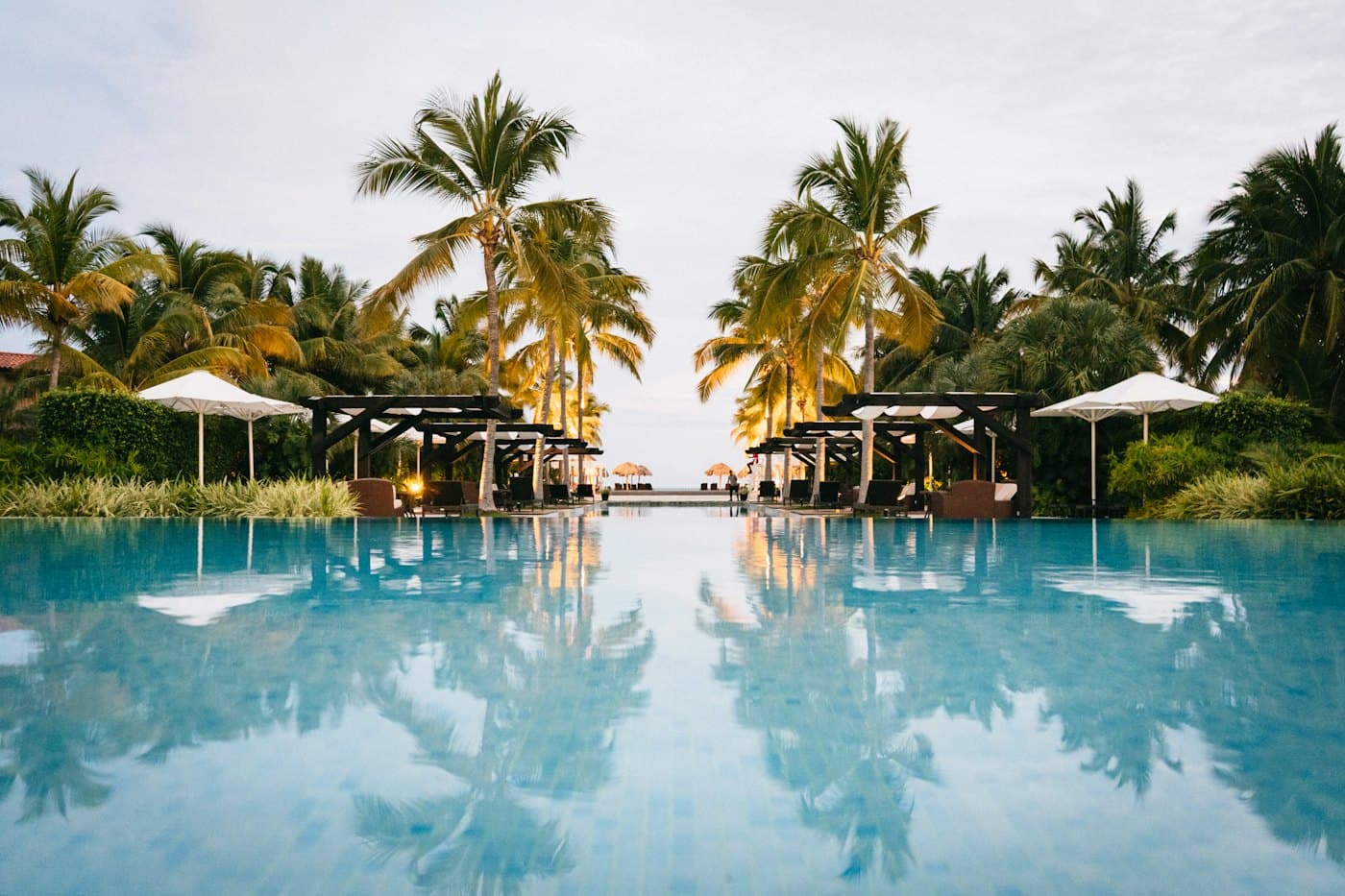
Rooftop Pool Hotels in Asia: What to Look For
4 May 2026 · 4 min read
A rooftop pool can make a city stay, but only if you check access, shade, hours and noise before you book.
A pool high above the traffic is one of the great pleasures of an Asian city stay. After a morning of temples, markets and crowded streets, floating above the skyline feels like a reward. Many cities across the region, from Bangkok to Singapore to Ho Chi Minh City, have towers where the pool sits on the roof or on a high terrace. The photos on listing pages are always flattering, though, and the reality can differ. This guide explains what to check so that the rooftop pool you picture is the one you actually get, and so that it suits your trip rather than just looking good on a screen.
Check who the pool is really for
Start by reading the hotel description carefully to see whether the pool is for all guests or only for those in certain room types or suites. Some properties share a rooftop pool with a members club or a separate residence tower, which can mean limited access or time slots. Others run the pool as part of a restaurant or bar, so non-guests may be present in the evening. Look for phrases such as exclusive to hotel guests or open to the public. If the listing is unclear, send the hotel a short message before booking. A clear reply tells you a lot about how the property is run.
Look at size, depth and layout
Rooftop pools are often smaller than ground-level ones because of structural limits. Many are plunge pools or narrow lap-style pools designed more for cooling off than for swimming. If you want to swim lengths, look for any mention of pool length, and read recent guest comments for words like spacious or tiny. Pay attention to the number of sun loungers too. A lovely pool with six loungers for two hundred rooms will feel crowded by midday. Photos taken from a wide angle can mislead, so compare several images and check whether guests have uploaded their own.
Think about sun, shade and heat
On a roof there is little natural shade, and in tropical climates the sun can be strong by mid-morning. A good rooftop has umbrellas, cabanas, tall plants or a partial canopy. Check which way the pool faces if the hotel mentions it, because a west-facing deck is wonderful at sunset but can be very hot in the afternoon. Bring sun protection regardless, and plan your swim for early morning or late afternoon when the light is softer. In the rainy season, ask whether the pool stays open during showers, since some close for safety when storms roll in.
Confirm opening hours and rules
Rooftop pools commonly have fixed hours, and these may be shorter than a ground-floor pool. Some close early in the evening to protect guests in rooms below, or because the roof bar takes over. Others close for cleaning during part of the day. If you are arriving late or planning a night swim, check the hours before you book. Also look for rules about children, since some adults-only rooftops exist and some pools have restricted depth areas. Ask about towels, lockers and changing rooms as well, because a roof with no changing area can be awkward if you are heading out afterwards.
Consider noise and atmosphere
A roof bar and a pool often share the same space, and the mood can shift from quiet in the morning to lively at night. If you want a peaceful stay, read recent reviews for mentions of music, events or late closing times. Rooms on the floors just below the roof can hear footsteps and music, so request a room on a lower or quieter level if sleep matters to you. On the other hand, if you enjoy a social scene, a hotel with a busy rooftop bar can be a highlight. Match the property to your own rhythm rather than to the photos alone.
Balance the view against the location
A spectacular skyline view is worth little if the hotel is far from where you want to spend your days. Look at the map before you fall for the pool. Being close to a metro or rail station often saves more time and money than any amenity. In some cities, the best pool hotels sit in business districts that are quiet at weekends, while the old quarters have fewer tall buildings and therefore fewer rooftop pools. Decide which neighbourhood suits your plans first, then compare the pools among hotels that already fit.
A simple checklist before you book
Before you confirm, run through a short list. Is the pool open to all guests? What are the opening hours? Is there shade and enough seating? Are there rules about children or swimwear? Does the cancellation policy allow changes if the weather turns? Then read the most recent reviews for honest comments about crowding and upkeep, since these are more reliable than older ones. If you can, choose a flexible rate so you can adjust if you find a better match. With these checks done, you can relax and enjoy the view with confidence.
Written by the Hoko Travel editorial team. Details such as prices and opening hours can change, so please check official sources before you travel.
Keep reading
Ideas · 3 min read
Best Cities in Asia for a Weekend Break
Compact, well connected cities that reward a short stay, plus tips on choosing a hotel for two or three nights.
21 August 2026
Ideas · 3 min read
Wellness Stays: Spa and Yoga Retreats in Asia
How to choose a spa hotel or yoga retreat that genuinely helps you rest, rather than one that only looks calm.
2 August 2026
Ideas · 3 min read
Heritage Hotels: Sleeping in History
Colonial mansions, old courtyard houses and converted palaces can be superb stays, if you set the right expectations.
7 July 2026